
Published February 25, 2026
The Beauty in the Blemish: Why We Keep Old Photos, Even When They’re Damaged
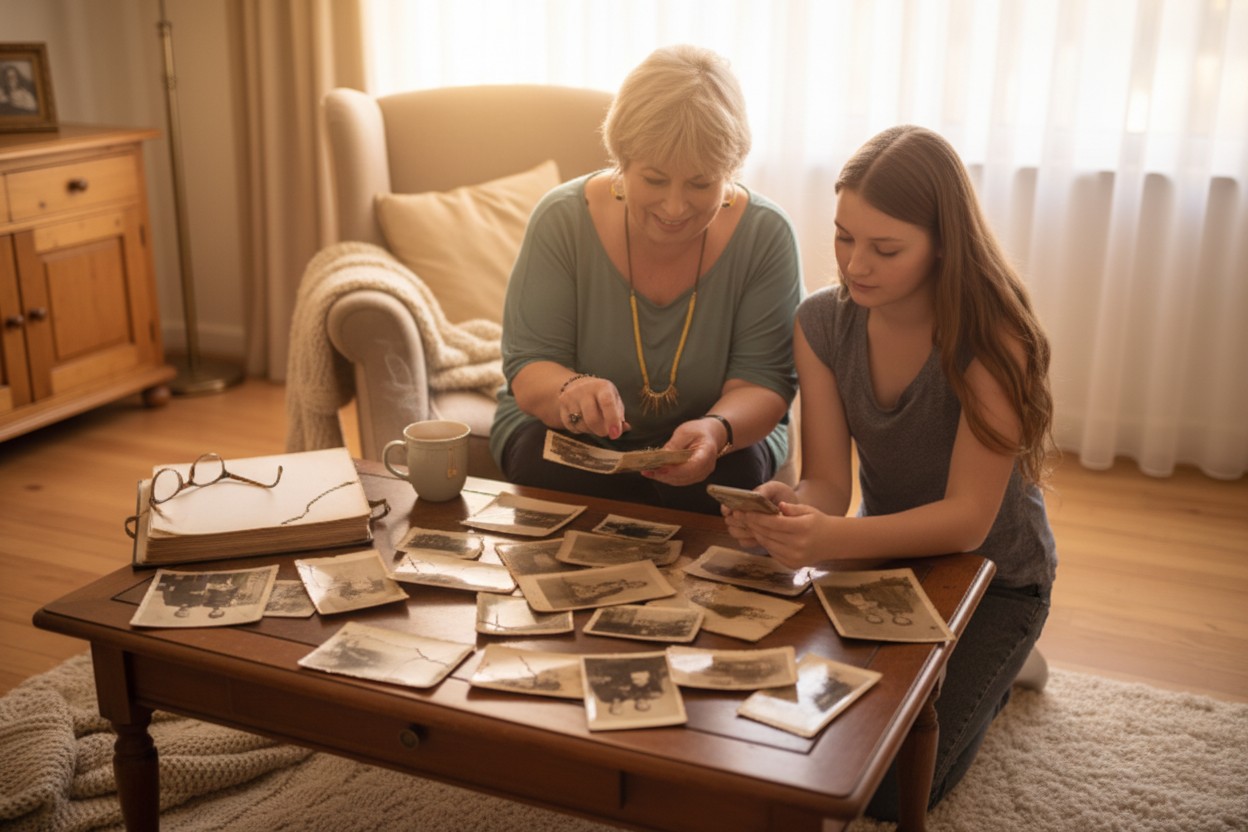
Tucked away in a shoebox, nestled in the back of a closet, or pressed between the pages of a dusty album, they reside. They are the ghosts of our past, captured on fragile paper. We’re talking about old photographs—the ones with corners softened and bent from years of handling, surfaces crisscrossed with mysterious cracks, and colors that have faded into a dreamy, sepia-toned haze. Some are torn. Others are stained by water, coffee, or time itself. A modern digital photographer might discard such a flawed image with a single click. Yet, we don't. We keep them, protect them, and cherish them. But why? Why do we hold on so tightly to these imperfect, damaged relics when we live in an age of pristine, high-definition digital perfection?
The answer is beautifully simple: a photograph’s value is rarely in its technical perfection. Its true worth is measured in the weight of the story it carries, and sometimes, the damage is part of that story. These are not just images; they are artifacts, tangible pieces of a moment that is otherwise gone forever.
A Tangible Link to the Past
In our increasingly digital world, we are surrounded by intangible assets. Our music is in the cloud, our books are on a screen, and our memories are stored as data on a server thousands of miles away. An old photograph defies this. It is a physical object. You can hold it in your hand. You can feel the texture of the paper, trace the faded handwriting on the back that reads, “Summer 1968, Aunt Carol laughing.” This physical connection is powerful. The photograph you are holding was *there*. It was present in the room when your grandparents danced at their wedding; it was in the camera that captured your mother’s first steps. It absorbed the light of that specific moment in time.
This physicality makes the memory feel more real, more accessible. The object itself becomes a vessel for the past. Unlike a file on a hard drive, which can be endlessly duplicated without losing quality, that original print is unique. Its very existence is a testament to survival, a small paper rectangle that has journeyed through decades to reach you.
When Damage Becomes Part of the Narrative
We often think of damage as a flaw, something that detracts from the value of an object. With old photos, the opposite can be true. The imperfections are not just random decay; they are evidence of a life lived. They are the scars that tell a story all their own.
- The Wallet Crease: That deep, permanent fold down the center of a photo of a smiling young woman? It tells you this wasn't a picture left in an album. It was a picture carried every day in a wallet, close to someone's heart. It was looked at, touched, and loved until its mark was indelible.
- The Water Stain: The faint, brownish bloom in the corner of a family portrait might be a reminder of the time the attic leaked, and the frantic rush to save the boxes of memories. It’s a mark of a shared family event, a tiny crisis overcome.
- The Softened Edges: The rounded, frayed corners of a photograph speak of a picture that has been passed from hand to hand, shared across tables at family gatherings, and shown to countless friends and relatives. It’s a sign of a story told and retold.
These blemishes transform the photograph from a simple record of an event into a rich historical document. The damage is a patina, like the warm glow on antique wood. It adds a layer of authenticity and humanity that a perfect, sterile image could never possess. It whispers of love, of travel, of daily life, and of the simple act of being treasured.
A Key to Unlock a Lost World
Old photographs are also powerful psychological triggers. A single glance at a faded image can unlock a flood of sensory memories—a phenomenon known as involuntary memory. You don't just see your grandmother in her garden; you can almost smell the roses and the damp earth. You don't just see a picture of a childhood birthday party; you can almost hear the laughter and taste the sugary icing on the cake.
The damaged state of the photo can even enhance this experience. The fading and discoloration force our minds to work a little harder, to fill in the gaps. In doing so, we engage more deeply with the memory, coloring it with our own emotions and recollections. The photo becomes less of a literal depiction and more of a dreamlike portal, a starting point for a journey back in time. It’s not about seeing perfectly; it’s about *feeling* completely.
Bridging the Physical and Digital Worlds
Of course, there is a poignant paradox in cherishing these fragile objects. The very things that make them special—their age, their physicality, their unique damage—also make them vulnerable. Paper tears, ink fades, and accidents happen. So, how do we honor the physical artifact while ensuring the memory it holds is safe from being lost forever?
This is where we can thoughtfully embrace modern technology not as a replacement, but as a partner in preservation. The goal isn't to erase the imperfections but to safeguard the entire story, blemishes and all. While traditional flatbed scanners can be cumbersome and sending precious originals away in the mail is nerve-wracking, simpler solutions now exist. For instance, an app like Photomyne allows you to digitize these precious artifacts right from your phone, in the safety of your own home. The beauty of this approach is that the originals never have to leave your sight. Advanced computer-vision technology on the device itself can detect the photo's borders, correct any perspective skew, and gently optimize faded colors, all while you scan. You can capture everything from 35mm slides to old Polaroids and even handwritten letters. You're not just creating a digital copy; you're capturing the photo in its current, perfectly imperfect state—creases, fading, and all—and creating a secure, shareable archive of that unique story for safekeeping and for future generations to discover.
A Legacy for Tomorrow
Ultimately, we keep damaged photos because they are our legacy. They are the proof of our existence, the thread that connects us to those who came before and those who will come after. When you show your child a worn-out photo of their great-grandfather, you are doing more than sharing an image. You are passing down a piece of your family's soul. You are saying, "This was us. This is where you come from. This life, with all its joys and struggles, was real."
In the end, that faded, torn photograph is a profound statement on what it means to be human. Our lives are not perfect. We all have our own creases, our own faded spots, our own beautiful damage. We are shaped and weathered by our experiences. And just like those cherished old photos, it is these very imperfections that tell the most compelling story of all.